
 0420 377 799
Supported Independent Living (SIL) is one of the most valuable forms of support available through the National Disability Insurance Scheme (NDIS). It helps people with significant support needs develop daily living skills while maintaining greater independence in a shared or individual living environment.
Understanding how SIL funding works can make the application process less overwhelming and improve your chances of receiving the support you need. This guide explains the key steps involved, eligibility requirements, and what to expect when applying for funding under NDIS supported independent living in Adelaide.
What Is Supported Independent Living (SIL)?
Supported Independent Living is an NDIS-funded support designed for participants who require assistance with everyday tasks. These supports are usually provided in a shared living arrangement, although individual living options may also be available depending on a participant’s circumstances.
Funding for supported independent living in Adelaide usually covers support workers who assist with:
- Personal care and hygiene
- Meal preparation
- Household tasks
- Medication management
- Developing daily living skills
- Building independence and confidence
- Overnight support when required
It is important to understand that SIL funding primarily covers support services and not the accommodation costs.
Who Is Eligible for SIL Funding?
SIL is intended for NDIS participants with higher support needs who require regular assistance throughout the day or night.
A SIL provider in Adelaide may consider SIL appropriate if:
- You need substantial support to live independently
- You require assistance with daily activities on an ongoing basis
- Informal supports from family or carers are no longer sufficient
- Shared living arrangements could help meet your goals and support needs
SIL represents a reasonable and necessary support under NDIS guidelines
Eligibility is determined based on individual circumstances rather than a specific diagnosis.
Step 1: Discuss SIL During Your NDIS Planning Meeting
The journey usually begins during your NDIS planning or plan reassessment meeting. Before the meeting, gather information about:
- Your daily support requirements
- Current living arrangements
- Challenges you experience at home
- Long-term goals for independence
- Reports from healthcare professionals and support providers
Clearly explaining how additional support would improve your daily life can help the NDIS understand your need for SIL.
Step 2: Complete a Functional Assessment
A functional assessment plays a significant role in determining SIL eligibility. The assessment evaluates your ability to:
- Manage personal care
- Complete household tasks
- Make decisions independently
- Participate in the community
- Maintain health and safety
The resulting report provides evidence of your support requirements and helps justify the need for funding of supported independent living in Adelaide.
Step 3: Explore Suitable Living Arrangements
Before SIL funding can be approved, the NDIS generally wants to understand where and how supports will be delivered. Possible arrangements may include:
Shared Living
Participants live with others and receive support based on their individual needs.
Individual Living
Some participants may require a dedicated support arrangement due to complex circumstances or specific support needs.
Transitional Arrangements
Short-term arrangements may be used while a long-term housing solution is being developed.
Choosing the right living arrangement helps ensure the proposed supports align with your goals and daily requirements.
Step 4: Develop a Roster of Care
A roster of care outlines the support hours required throughout the day and night. This document includes:
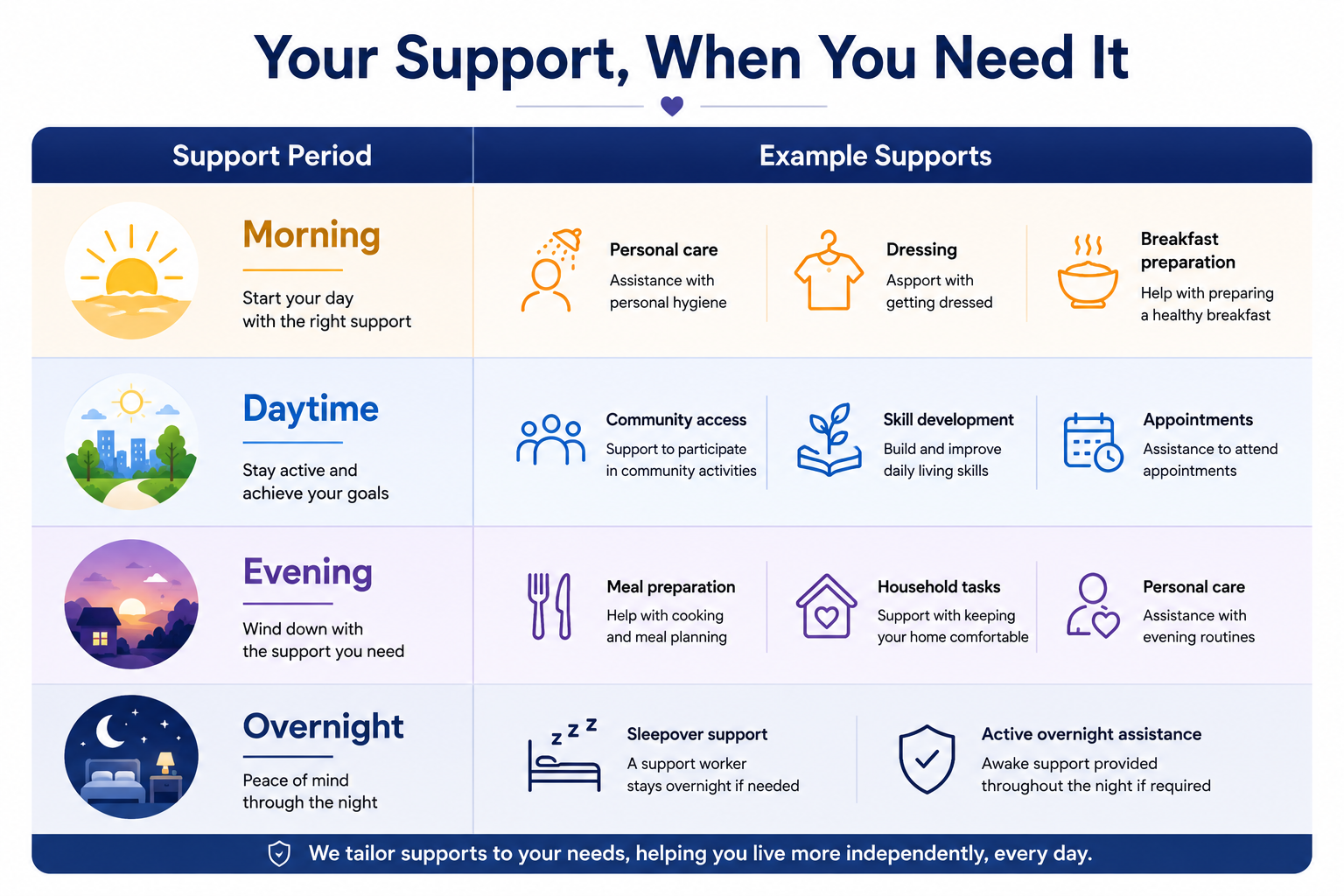
The roster demonstrates the level of support needed and forms part of the evidence submitted to the NDIS.
Step 5: Submit the SIL Funding Application
Once assessments and supporting documentation are complete, a SIL proposal can be prepared and submitted to the NDIS.
The application usually includes:
- Functional assessment reports
- Supporting medical evidence
- Participant goals and aspirations
- Housing information
- Roster of Care
- Details of the proposed SIL provider
The NDIS reviews the information to determine whether the requested supports are reasonable and necessary.
Step 6: Await the NDIS Decision
The review process can take time depending on the complexity of the application. During assessment, the NDIS considers:
- Whether SIL is the most appropriate support option
- The participant’s level of functional impairment
- Available informal supports
- Cost effectiveness of the proposed arrangement
Alignment with participant goals
Additional information may be requested before a final decision is made.
Common Reasons SIL Applications Are Delayed
Understanding common obstacles can help participants prepare more effectively. Some frequent issues include:
- Insufficient supporting evidence
- Incomplete functional assessments
- Unclear participant goals
- Missing documentation
- Lack of detail regarding support requirements
Ensuring all documentation is thorough and accurate can help reduce delays.
Your Journey to Greater Independence Starts Here
Get personalised guidance and support to access the right SIL funding for your needs. Contact SA National Disability Services today for expert guidance on SIL funding, eligibility, and accommodation options.
Frequently Asked Questions
Can SIL funding be included in an existing NDIS plan?
Yes. Participants can request it from a SIL provider in Adelaide during a plan review if their support needs have changed significantly since their current plan was approved.
Does SIL funding pay for rent and household bills?
No. SIL funding covers support services. Participants are responsible for accommodation costs, rent, utilities, and everyday living expenses.
Can I choose who I live with in a SIL home?
Yes, participants have opportunities to discuss compatibility and preferences before moving into a shared living arrangement.
Can SIL funding be combined with other NDIS supports?
Yes. Supported independent living in Adelaide is often provided alongside other NDIS-funded supports such as Support Coordination, community participation supports, and personal care services.

